Русский
  Română



CRDC Participated in the Local Integration Workshop “From Coordination to Action” Held in Cahul

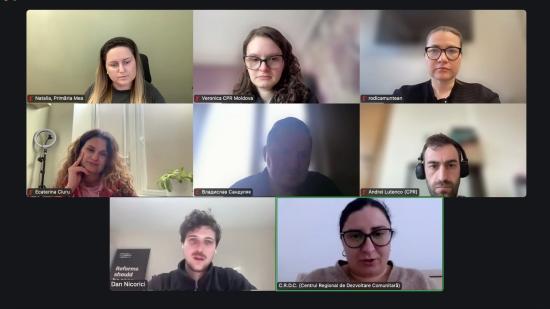
On 15 October 2026, the Regional Centre for Community Development (CRDC) participated in Radio Moldova's “Spațiul Public” programme, dedicated to the state of democracy and public participation in the Republic of Moldova during a year marked by significant reforms.
During the programme, Irina Bejan, Executive Director of CRDC, presented the perspective of local communities in southern Moldova, drawing on the organisation's experience in citizen mobilisation, developing community initiatives and promoting dialogue between civil society and public authorities.
The discussion addressed several challenges affecting citizens' participation in decision-making processes: trust in institutions, accessibility of public spaces, civic education for young people and the ability of public authorities to transform public consultations into genuine dialogue.
Public participation: positive examples and persistent challenges
Responding to a question about the extent to which citizens feel they can influence decisions affecting their lives, the CRDC representative highlighted the differences between local communities.
The organisation's experience shows that there are localities where cooperation between authorities and citizens works effectively and provides encouraging examples, but also communities where people do not feel sufficiently heard or involved.
One significant challenge remains the lack of participation mechanisms that are sufficiently clear, accessible and properly explained to citizens. Even when consultation opportunities exist, they do not always create a sense that participation can genuinely influence decisions.
In this context, the importance of strengthening trust between citizens and institutions was emphasised through honest and continuous communication that goes beyond the formal organisation of public consultations.
Community spaces must be accessible and functional
Another topic addressed was the use of vacant public buildings and their transformation into spaces dedicated to community initiatives.
Drawing on CRDC's experience in organising activities and mobilising citizens, Irina Bejan highlighted the conditions in which public consultations and community meetings are sometimes held.
Many public spaces remain underused or do not provide the necessary conditions for participatory activities. Lack of heating, inadequate infrastructure and limited accessibility for persons with disabilities represent real barriers to participation.
In her contribution, the CRDC representative noted that, based on the organisation's practical experience, most venues where community activities are held cannot adequately ensure accessibility for persons with disabilities.
At the same time, the willingness of authorities to provide and adapt such spaces varies from one community to another.
The key message was that public participation cannot be encouraged simply by inviting people to consultations if the basic conditions for comfortable and inclusive participation are not ensured.
Civic education should begin before voting age
The programme also addressed the role of civic education in developing active citizens and the age at which children and young people should be encouraged to participate in decision-making.
From CRDC's perspective, education for participation can begin as early as kindergarten, through age-appropriate activities in which children learn to express their opinions, participate in group decisions and take responsibility.
Working with approximately 1,000–1,500 young people each year, the organisation observes both their potential for engagement and the increasing challenges of attracting them to volunteering, debate clubs, training sessions and civic activities.
The discussion also highlighted that intensive interaction in the online environment does not automatically translate into active community participation. Therefore, more opportunities are needed for practical learning, direct engagement and dialogue with public authorities.
Irina Bejan emphasised the need for long-term civic education programmes that go beyond one-off activities and provide young people with continuous opportunities to participate, including through representative structures within educational institutions.
Democracy becomes meaningful when participation produces results
In the concluding part of her contribution, the discussion focused on the changes needed for people to perceive democracy not as an abstract concept, but as a process they can genuinely influence.
One essential element is the willingness of public authorities to build continuous dialogue with citizens and pay attention to individuals and groups who are not present at public consultations.
Equally important is communicating the results of participatory processes. When citizens submit proposals and recommendations, they should be able to find out how these were reviewed, which were accepted and what decisions were made following the consultations.
Publishing summaries of recommendations, providing reasoned responses and maintaining dialogue after consultations have concluded are practices that can help increase trust in institutions.
For CRDC, public participation is a continuous process of learning and building trust, in which both public authorities and citizens share responsibility for developing more democratic, inclusive and active communities.
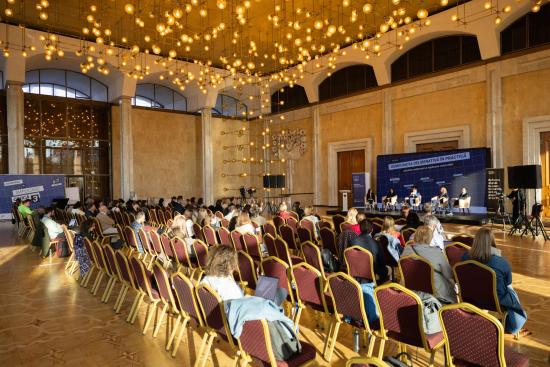
Participation in the “Spațiul Public” programme represents a continuation of CRDC's involvement in discussions on strengthening democracy and civic participation, including at the 2026 Civic Engagement Conference, held in Chișinău on 6–7 October.