Русский
  Română



“LEADERS WHO UNITE” – Tetiana Kravchenko: from Kherson region to Cahul, a story of adaptation, family and gratitude
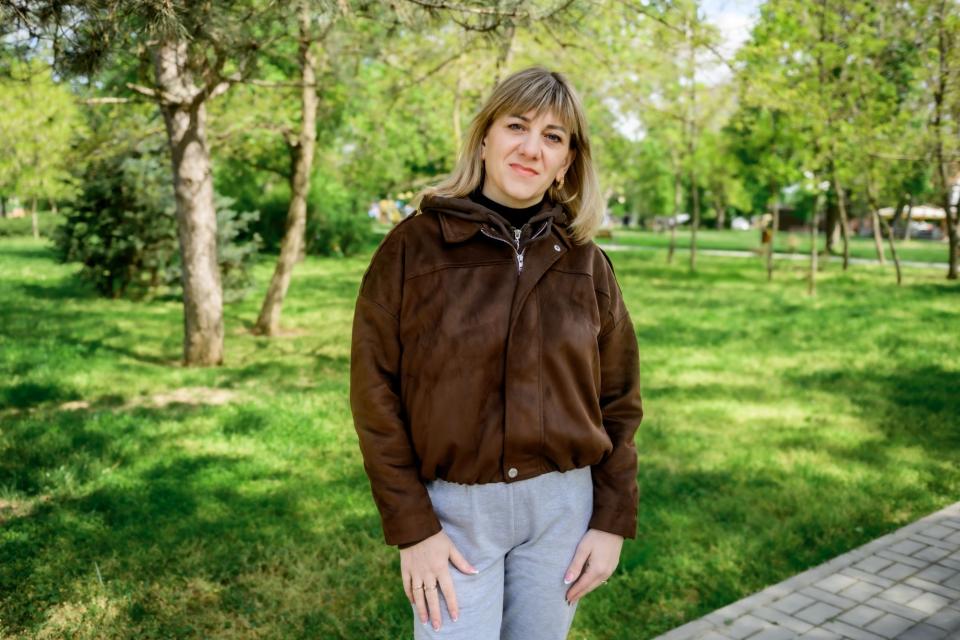
Tetiana Kravchenko is originally from the Kherson region, Ukraine. Before the war, her life was connected to family, work and household responsibilities. Together with her family, she was involved in farming. Tatiana also studied to become a hairstylist-modeler, and although she did not work officially in this field, she had her own clients who came to her home.
Moving to another country was a difficult stage, marked by uncertainty, a new language and unfamiliar people. However, over time, things became calmer, especially thanks to the presence of other people from Ukraine.
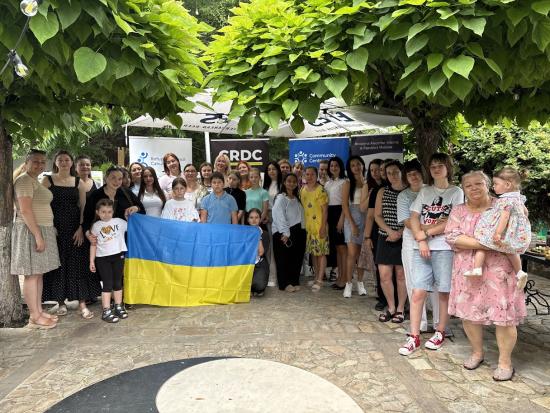
The interview is part of the “Women Leaders Who Unite” campaign, through which the Regional Center for Community Development brings forward the stories of refugee and migrant women who, through courage, engagement and solidarity, contribute to strengthening the community in Cahul.
Tatiana, tell us a little about yourself. What was your life like before moving to Cahul, and what were you doing?
Before the war, I lived in the Kherson region. We were involved in farming: we grew many hectares of strawberries and sunflowers.
I also graduated from a vocational school and trained as a hairstylist-modeler. I did not work officially in this profession, but I had my own clients who came to my home. My life was connected to work, family and the things I did every day.
How did this new stage of life and the move to another country begin for you?
This new stage was very difficult. A different country, a different language, different people and many unknown things.
At first, it was hard to understand what would come next and what life would be like. But gradually, I began to feel calmer — for myself and for my children.
How did your adaptation in Cahul go? What helped you feel more confident and more “at home”?
Adaptation was easier because there were many acquaintances from Ukraine here. New friends appeared, along with communication and support from relatives.
All of this mattered a lot. When there are people close to you, when you can talk, when you feel support, it is easier to move forward and get used to a new place.
What are you doing today?
Today, I am raising my youngest daughter, and my time is mostly dedicated to my child and family. I would like to be more involved in different community activities, but during this period I cannot participate as much as I would like.
This is a stage in which my main priority remains caring for my child, but in the future I would like to be more present and more active in community life.
How do you see your contribution to the life of the Cahul community today?
At this stage, I see my contribution mainly through caring for my family and through trying to offer my children safety, peace and stability.
Even though I cannot participate in activities now as much as I would like, I believe that every family that tries to adapt, live in peace and build good relationships with those around them contributes, in a way, to community life.
What would you like to say to the people of Cahul and to other communities that receive and support refugees?
I want to say a big thank you for the warm welcome. Thank you to all the people who have empathy, who understand and who support our Ukraine.
For us, this support matters a lot. When you are far from home, during a difficult period, every gesture of humanity, every kind word and every form of support feels truly important.
This material was produced with the financial support of the European Union, contracted by ICMPD through the Migration Partnership Facility. Its content is the sole responsibility of the Regional Center for Community Development and does not necessarily reflect the position of the European Union.